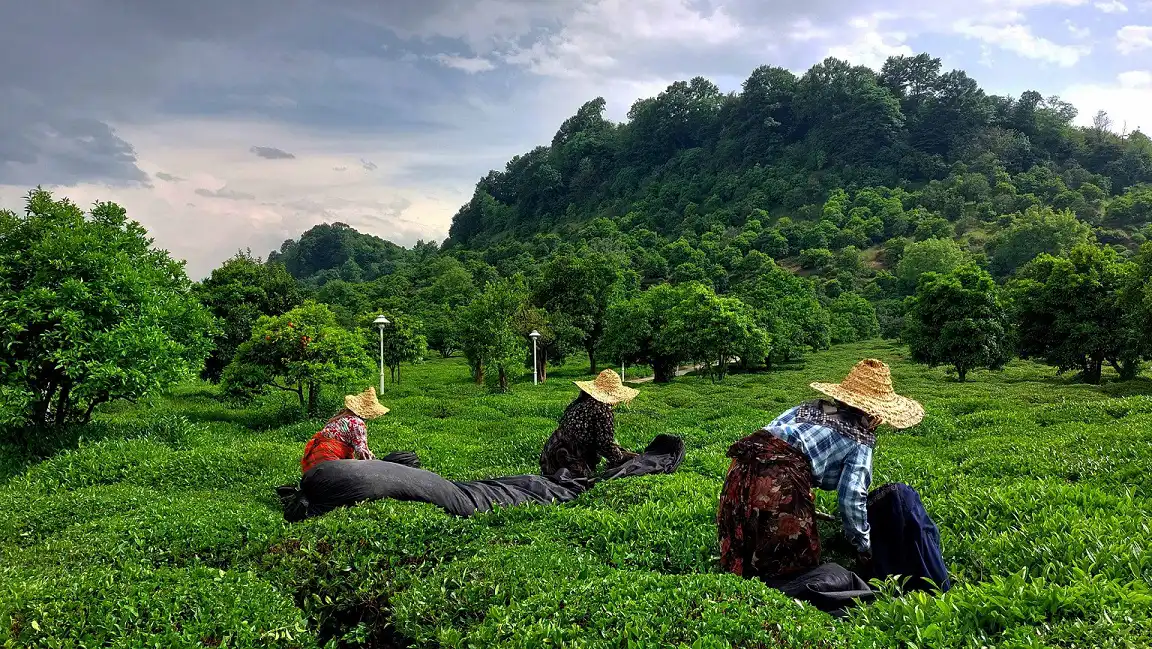
Impact Starts at the Soil Level
In international tea trade, product safety is shaped long before the leaf reaches a laboratory. For a globally active export company, the foundation of safety begins at origin. Nivan Teasun approaches tea sourcing with the understanding that environmental conditions at the farm level directly influence chemical composition, compliance performance, and long-term supply reliability for international buyers.
Origin Conditions Shape Chemical Outcomes
Tea plants are highly responsive to their growing environment. Soil composition, water quality, agrochemical inputs, and surrounding industrial activity all affect the chemical profile of the harvested leaf. In northern Iran, tea cultivation takes place in regions with relatively low industrial pressure and moderate agricultural intensity. These conditions support production within internationally accepted safety parameters and align with the expectations of global B2B tea buyers.
For Nivan Teasun, safety begins with sourcing from landscapes that naturally support low contamination risk. The company prioritizes farm networks where soil health, rainfall patterns, and responsible cultivation practices contribute to stable and compliant raw material. This approach allows export partners to rely on origin-level advantages rather than corrective measures applied later in the supply chain.
Farm-Level Strategy and Environmental Integrity
Nivan Teasun integrates sourcing, processing, and export coordination to maintain visibility across the entire tea journey. By working closely with growers and local processors, the company ensures that agricultural inputs, harvest handling, and leaf selection remain aligned with international quality and safety expectations. This farm-level strategy supports long-term supply relationships and strengthens traceability for global buyers.
The company’s impact framework emphasizes environmental integrity at origin. Maintaining cultivation in regions with lower agrochemical pressure and controlled inputs helps reduce the risk of unwanted residues or heavy metal accumulation. As global compliance requirements evolve, this origin-first model provides a stable foundation for exporters and importers seeking consistent and reliable tea supply.
Low-Input Cultivation Environment
The agricultural structure of northern Iran’s tea sector supports a lower-input cultivation model. Compared with highly industrialized tea regions, farms in this area operate with moderate yield pressure and controlled use of synthetic inputs. This creates an environment where natural conditions play a stronger role in crop management and quality outcomes.
Structural Characteristics of the Region
Tea gardens in northern Iran are often managed within smaller farm structures, allowing for more direct oversight of cultivation practices. With fewer incentives for intensive chemical application, growers tend to rely on climate cycles, manual management, and traditional farming knowledge. This structural reality contributes to a reduced risk of excessive agrochemical accumulation in the leaf and supports long-term soil stability.
For international buyers, the implications are clear. A lower-input cultivation environment can support consistent quality while reducing the need for corrective processing or blending adjustments. This stability is particularly valuable for packers and blenders who require predictable chemical profiles and dependable sourcing conditions.
Implications for Export Safety and Compliance
Reduced reliance on synthetic inputs at the agricultural level directly influences export compliance outcomes. Tea sourced from environments with restrained chemical use tends to present lower risk in residue testing and heavy metal evaluation.This creates a more reliable foundation for meeting the regulatory requirements of importing markets across Europe, Eurasia, and the Middle East.
Nivan Teasun supports these origin advantages with internal monitoring and documentation processes. By maintaining records of sourcing regions, processing partners, and quality testing results, the company strengthens transparency for buyers seeking verified supply chains. This approach supports procurement teams that prioritize both quality and regulatory confidence.
Heavy Metal Safety in Context
Heavy metal presence in agricultural products is influenced by environmental conditions rather than processing alone. In tea, the key consideration for international buyers is not only the presence of trace elements in the dry leaf, but the level of exposure in brewed infusion. Understanding this distinction is central to evaluating safety across global tea supply chains.
Scientific Perspective on Tea and Safety
Academic assessments of tea consumed in Iran have shown that levels of heavy metals such as lead, cadmium, arsenic, and mercury generally fall within internationally accepted limits when evaluated under typical brewing conditions. These findings align with broader global research indicating that tea from lower-contamination regions can meet international safety thresholds for human consumption.
Trace amounts of naturally occurring elements are present in most agricultural products, including tea. The relevant metric for buyers is whether exposure levels remain within safe consumption ranges. Studies of tea infusions sourced from northern Iran suggest non-hazardous exposure levels, supporting the suitability of these teas for international markets that maintain strict safety requirements.
Nivan Teasun Quality Assurance Framework
Nivan Teasun reinforces origin-level safety advantages with a structured quality assurance approach. Batch-level laboratory testing is conducted to monitor chemical parameters and confirm alignment with buyer specifications. Supplier traceability systems track leaf movement from garden networks to processing facilities and export preparation points.
Consistent grade monitoring and controlled sourcing further support reliability across shipments. For Nivan Teasun, safety is not represented by a single certificate or isolated test result. It is built through a layered system that integrates agricultural sourcing, processing oversight, and export documentation. This integrated model allows international buyers to engage with a supply partner that prioritizes stability and transparency.
Why This Matters for Global Buyers
International tea procurement has evolved beyond price and grade evaluation. Buyers increasingly consider environmental integrity, supply chain transparency, and chemical exposure risk when selecting sourcing partners. Origin credibility has become a key component of long-term procurement strategy for packers, blenders, and industrial tea users.
Procurement Trends in the Global Tea Trade
Global buyers are seeking suppliers capable of demonstrating consistent safety performance and traceable sourcing. Regulatory frameworks across multiple markets require documented compliance with residue and heavy metal limits. At the same time, consumer expectations around sustainability and responsible sourcing continue to influence purchasing decisions at the retail and industrial levels.
Sourcing from lower-contamination origins can support reduced compliance risk and greater flexibility in formulation and blending. Stable chemical profiles enable buyers to maintain consistent product performance across different markets. For importers managing multiple regulatory environments, dependable sourcing reduces operational complexity and strengthens long-term planning.
Integrated Farm-to-Factory Supply Model
Nivan Teasun operates as an integrated supplier with oversight across cultivation, processing, and export coordination.This structure allows the company to maintain visibility over the full journey of the tea leaf, from harvest through manufacturing and shipment. By aligning farm networks with processing facilities and export logistics, the company supports continuity and reliability for international clients.
For global buyers, working with an integrated supplier can streamline communication and reduce supply chain fragmentation. Clear traceability, consistent quality monitoring, and coordinated shipment management contribute to more predictable procurement outcomes. Nivan Teasun’s model is designed to meet the operational expectations of B2B tea buyers seeking stable partnerships and transparent sourcing systems.
Impact Beyond Compliance
In the context of international tea trade, impact is measured not only by compliance with regulations but by the long-term stability of the supply system. Maintaining safe and reliable tea production requires continuous attention to environmental conditions, agricultural practices, and quality monitoring frameworks.
Building a Responsible Supply System
Nivan Teasun defines impact as the ability to maintain a supply chain where safety is embedded at the origin level. Investments in traceable sourcing networks, responsible input management, and soil health contribute to the resilience of the cultivation environment. Transparent quality data and ongoing monitoring support alignment with evolving international safety expectations.
This approach recognizes that the most significant indicators of product integrity are often those that are not visible in the final leaf. Maintaining low contamination risk requires consistent attention to environmental factors and agricultural practices over time. By focusing on these foundational elements, the company supports a supply model that can adapt to future regulatory and market developments.
Long-Term Commitment to Global Standards
Nivan Teasun continues to strengthen its quality and impact framework to meet the expectations of international buyers and regulators. Collaboration with growers, processors, and logistics partners supports a coordinated approach to safety and compliance. As global standards evolve, maintaining alignment across all stages of the supply chain remains a core priority.
From soil composition to export shipment, the company’s strategy is built on the principle that safety is cultivated rather than added. By prioritizing origin conditions and integrated supply management, Nivan Teasun aims to provide international partners with a reliable source of tea that meets global safety standards from the ground up.